


Thanksgiving week brings plenty of chances for your 2-, 3- or 4-year-old to join the conversation. The good news? You don’t need flashcards or a special lesson plan. Everyday family moments can help your child practice new words, take turns, and tell a story.
Here are seven simple ways to make the most of the holiday chatter. No quizzing required. Just invite your child in, say the words, and give them time to respond!
1. Cook Together to Practice Sequencing Words
Cooking gives your child a reason to hear and use words like first, next, and then. They can help wash vegetables, stir a bowl, or watch you mash the potatoes.
Try saying: “First we wash the potatoes, then we boil them, and next we mash them.”
You’re showing how actions happen in order. Even if your little helper mostly watches, they’re hearing useful language in context!
2. Pass a Dish to Practice Requesting and Turn-Taking
The dinner table is a natural place to practice asking, waiting, and responding. Keep the request simple, then pause so your child can take a turn.
Try saying: “Can you pass the rolls to Grandma, please?”
Your child hears a polite request and gets to help someone else. When they ask for a dish, you can model the words: “You can say, ‘Can you pass the carrots, please?’”
3. Name Relatives to Build Category and Relationship Words
Family gatherings are full of opportunities to connect names with relationships. Your child may know someone’s name but still be learning words like aunt, cousin, and grandparent.
Try saying: “Aunt Maya is Dad’s sister, and Leo is your cousin.”
Keep it natural. Point out familiar people in photos or as they arrive. These words help your child sort out who’s who and talk about how people are connected.
4. Retell the Day to Practice Narrative Memory
At bedtime, your child can revisit the day with you. A little prompting helps them remember what happened and put events into words.
Try saying: “What was one thing we did before dinner? What happened after we ate?”
If your child answers with one word, you can gently add detail: “Yes, we played outside before dinner. Then we sat with everyone at the table.” Telling stories about past events is one way children practice narrative skills. Family storytelling and cooking can make those skills part of everyday life.
5. Count the Table to Practice One-to-One Counting
Set the table together and count real things your child can see and touch. Move one item at a time so each number matches one plate, chair, or person.
Try saying: “Let’s count the plates together: one, two, three. We need three plates.”
You might count chairs before guests sit down or cousins as they come into the room. It’s practical, playful, and part of the day!
6. Describe the Food to Grow Describing Words
Thanksgiving offers plenty to notice. Is the pie warm? Are the green beans crisp? Does the cinnamon smell sweet? Let your child explore with their senses and hear words for what they notice.
Try saying: “The mashed potatoes feel smooth, and the rolls smell warm and buttery.”
Your child may use a different word, or simply listen. Either way, you’re sharing descriptive language they can try out later.
7. Say Thank You to Build Social Language
A specific thank-you helps your child connect kind words with a person and an action.
Try saying: “Let’s thank Uncle Jay for bringing the pie. You could say, ‘Thank you for sharing it with us!’”
Model the words without making your child perform for the room. Social language grows through warm, everyday practice, not pressure.
Thanksgiving Talk Is a Great Start. Regular Practice Keeps It Growing!
These moments matter. But a holiday week is a small slice of your child’s year. It may give them a few dozen chances to practice conversation. In a Pre-K classroom, your child can have hundreds of language-rich exchanges every week, all year long.
A teacher trained in early childhood education can build on what a child says. If your child says, “Big tower,” a teacher might respond, “You built a big tower. What should we add next?” That back-and-forth gives your child a chance to hear a longer sentence, think about an idea, and try more words.
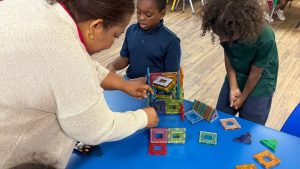
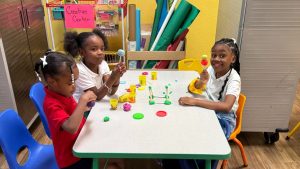
Classroom life also gives children regular practice with routines and peers: greeting a teacher, asking for a turn, listening during a story, describing something they made, or telling a classmate what happened. Those conversations happen throughout the day, not only at special gatherings. Research on mealtime talk and literacy development also highlights how everyday conversation can give children valuable opportunities to use vocabulary and tell stories.
And here’s the practical news for Houston families: Pre-K for 3- and 4-year-olds is free. Computer Kids enrolls through the state-funded Pre-K program, and eligibility and available seats depend on current program requirements, so reach out and ask what options may fit your child.
If your child is home during the school year, they may be missing the classroom talk, routines, and social practice that happen week after week. Your child should be in school learning, not waiting at home for August. That isn’t a criticism of stay-at-home parents. Home is full of important learning, love, and connection! It simply means a holiday week cannot replace the steady experience of being part of a classroom community.
For working families, finding a program that fits your schedule matters, too. Computer Kids serves Houston families with early education and dependable care. If you’re exploring pre-k programs houston tx, looking for early childhood education houston, or comparing daycare houston tx options, start by asking how children spend their day and how teachers support their communication.
Take a Tour and Listen for These Signs
A classroom tour is a chance to see and hear what learning looks like. As you visit, notice:
- How much teachers talk with children, not just to them. Do they pause for answers, follow a child’s idea, and add useful words?
- Whether children get chances to speak. Do they ask for help, describe their play, and talk with classmates?
- How everyday routines work. Are children invited to communicate during meals, clean-up, group time, and transitions?
- Whether the room feels warm and welcoming. Do children seem comfortable approaching teachers and joining in?
Want to keep your child’s language growing beyond Thanksgiving? Learn about Free Pre-K enrollment, explore our preschool program, or contact our team to ask about current seats. Call Computer Kids and let’s talk about a classroom where your child can practice, connect, and grow all year long!