


You want your child to feel confident on the first day of kindergarten. You want them ready to listen, learn, make friends, follow routines, and handle new challenges.
So which Pre-K approach works best?
A room full of flashcards and worksheets may look “academic.” But kindergarten readiness is much bigger than memorizing letters and numbers. Children also need independence, language, curiosity, self-control, cooperation, and the confidence to try.
That is why high-quality, play-based Pre-K is such a powerful choice!
At Computer Kids, we believe children belong in school learning. They deserve an early education experience that builds strong foundations through hands-on activities, caring relationships, purposeful play, and age-appropriate academic experiences.
And yes: play-based learning can prepare your child for kindergarten. In fact, it may prepare them better than academic drilling alone!
The Real Goal Is Kindergarten Readiness, not Worksheet Readiness!
Academic drilling usually means repeated practice with flashcards, worksheets, letter tracing, number drills, and memorization.
These activities can introduce children to important concepts. But they do not tell the whole story.
A child may know every letter of the alphabet and still need help with:
- Taking turns
- Listening to a teacher
- Transitioning between activities
- Asking for help
- Managing frustration
- Joining a group
- Following a classroom routine
- Staying engaged when something feels challenging
Those skills matter every single day in kindergarten!
Research from the National Association for the Education of Young Children explains that play and learning are not opposites. Young children learn best when teachers intentionally connect academic goals with active, meaningful experiences.
That is the heart of guided play. Children explore, create, move, talk, and solve problems while teachers help them notice letters, sounds, patterns, quantities, and new vocabulary.
What Play-Based Pre-K Really Looks Like
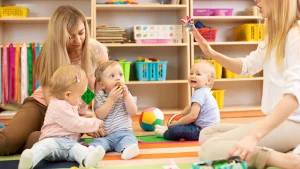
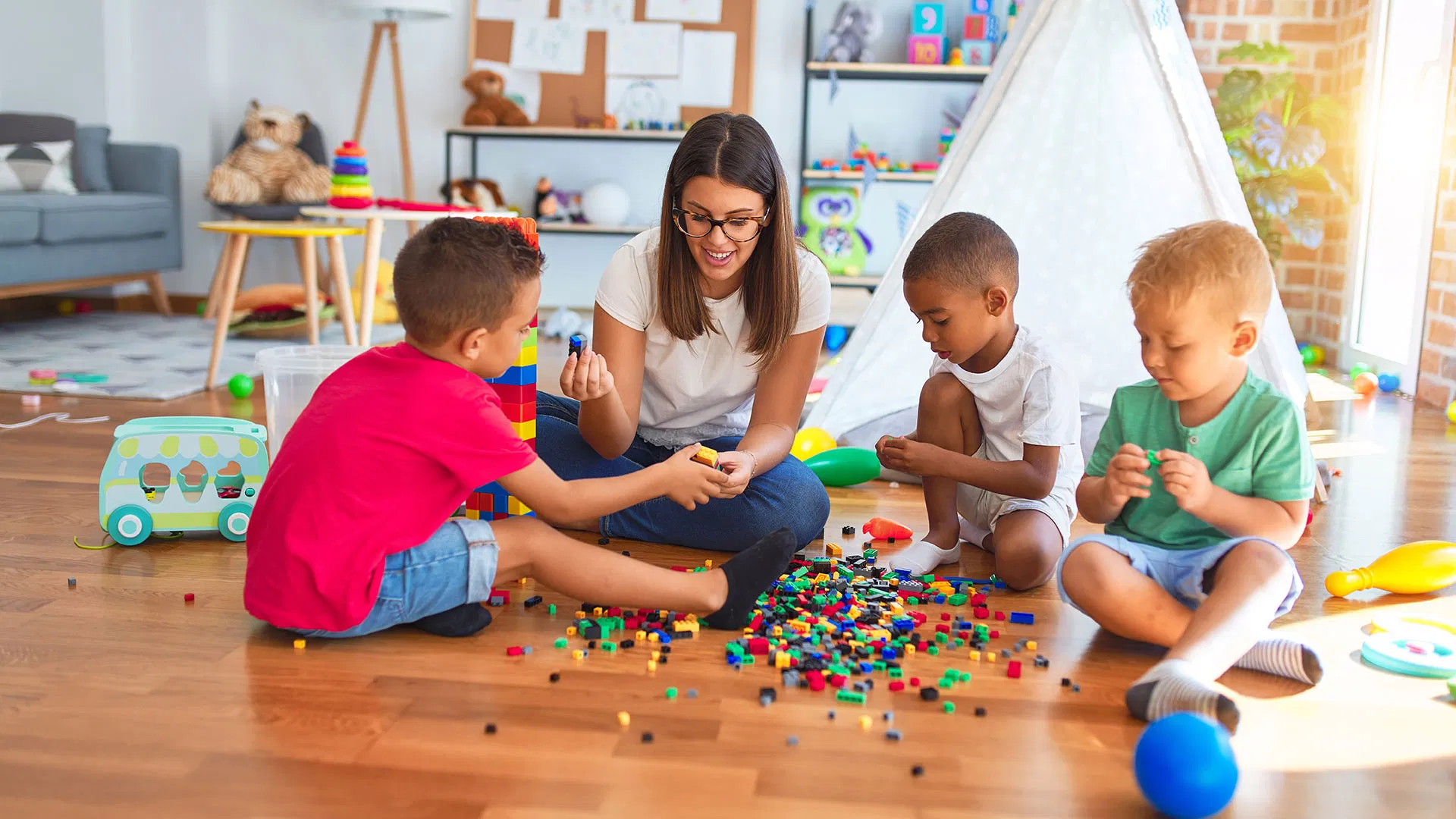
Play-based Pre-K is not “just letting children play.” It is thoughtful, purposeful, teacher-supported learning.
A block-building activity can become a lesson in:
- Counting and comparing
- Shapes and spatial awareness
- Planning and problem-solving
- Language and storytelling
- Cooperation and turn-taking
- Persistence when a structure falls down
A dramatic-play area can strengthen:
- Vocabulary
- Conversation skills
- Imagination
- Social confidence
- Understanding of everyday routines
An art activity can support:
- Fine-motor development
- Pencil control
- Color and shape recognition
- Creative expression
- Focus and follow-through
That is what learning looks like in early childhood. It is active. It is social. It is hands-on. And it is exciting!

Play Builds the Skills Flashcards Cannot Teach
Kindergarten is a group learning environment. Children are expected to participate, listen, communicate, and work alongside others.
Play gives children repeated practice with those skills in a natural way.
1. Independence
Can your child put away materials? Wash their hands? Open a lunch container? Choose an activity? Ask an adult for support?
These everyday tasks build confidence. A strong Pre-K program gives children opportunities to try things independently while caring teachers provide encouragement.
2. Listening and Following Directions
During a game, story, art project, or group activity, children learn to listen for instructions and respond to them.
“Find something red.”
“Put the blocks in the basket.”
“Choose a partner.”
“Clean up before we move to the next activity.”
These directions build the same attention and classroom habits children will need in kindergarten.
3. Taking Turns and Cooperating
Children do not automatically know how to share space, negotiate roles, or wait patiently. They learn through practice.
Play creates real situations where children must cooperate:
- Who gets to be the chef?
- How can we build the tower together?
- What happens when two friends want the same toy?
- How can we make room for one more person?
Teachers guide these moments with warmth. Children learn to communicate, compromise, and repair small conflicts.
4. Curiosity and Problem-Solving
A worksheet often has one expected answer. Play invites children to ask questions and try different ideas.
What will happen if we add another block?
Can we make the bridge taller?
How many cups do we need?
What should our pretend restaurant serve?
Curiosity creates motivated learners. When children are interested, they stay engaged longer and develop a positive relationship with learning.
5. Language and Early Literacy
Children build literacy through conversations, stories, songs, rhymes, dramatic play, drawing, and looking at books.
Teachers can introduce:
- New vocabulary
- Rhyming words
- Story sequence
- Letter sounds
- Name recognition
- Beginning writing
- Listening comprehension
A child drawing a picture and explaining it is practicing communication. A child “reading” a familiar book from memory is building confidence and story knowledge. A child making a shopping list in dramatic play is discovering that print has meaning.
That is early literacy in action!

Early Math Grows Through Everyday Play
Children do not need hours of number drills to begin building numeracy foundations.
They can practice math while they:
- Count blocks
- Sort buttons by color
- Compare which tower is taller
- Match socks or classroom materials
- Identify shapes
- Follow patterns
- Divide snacks among friends
- Measure ingredients during pretend or real cooking activities
These experiences help children understand quantity, order, comparison, patterns, and spatial relationships.
The Education Endowment Foundation’s early-years research supports the value of play-based learning when it is intentional and connected to children’s development.
The goal is not to rush children through academic content. The goal is to help them understand it deeply, and enjoy learning along the way!
Academic Drilling Has a Place, but It Should Not Be the Whole Program
Direct instruction can be useful. Children benefit from clear explanations, repetition, songs, stories, and teacher-led small-group activities.
The concern is balance.
A Pre-K classroom built mostly around sitting still, completing worksheets, and memorizing facts may leave too little time for movement, social practice, creativity, and exploration.
Children need both guidance and choice. They need structured routines and opportunities to make decisions. They need early literacy and numeracy experiences alongside active play.
The strongest programs do not ask, “Play or academics?”
They ask, “How can we teach important concepts through meaningful experiences?”
What to Look for in Pre-K Programs in Houston, TX
When you compare pre-k programs houston tx, look beyond colorful walls and impressive activity lists. Ask what your child will actually do each day.
Look for a program that provides:
- Warm, responsive teachers who know your child well
- Plenty of hands-on play indoors and outdoors
- Intentional early literacy and math experiences
- Opportunities for movement and creativity
- Practice with routines and independence
- Positive social-emotional guidance
- A clean, safe, welcoming classroom environment
- Communication with families about progress and development
- A clear focus on kindergarten readiness
- Evidence of quality beyond minimum licensing requirements
At Computer Kids, our approach combines play-based learning with intentional teaching. Children explore, ask questions, create, build relationships, and develop the foundations they need for future success.

Quality Matters, and Recognition Matters, Too!
Every parent wants dependable care. You also want to know that your child’s early education program takes quality seriously.
Computer Kids has achieved 3-Star status through Texas Rising Star, a quality rating and improvement system that recognizes early childhood programs meeting standards above basic licensing requirements. You can learn more on our accreditation page.
Our Belle Park location is also recognized as a Center of Excellence through Collaborative for Children. This recognition reflects a commitment to high-quality early education and positive outcomes for young children.
These distinctions matter because quality is not just about keeping children busy. It is about creating a nourishing environment where children feel safe, known, challenged, and encouraged.
That is the kind of foundation that helps children enter kindergarten ready to learn!
Free Pre-K for Eligible 3- and 4-Year-Olds
Your child belongs in school learning, and eligible 3- and 4-year-olds may qualify for free Pre-K at Computer Kids.
Our Free Pre-K enrollment page explains eligibility and enrollment details. State-funded Pre-K eligibility may depend on factors such as age, income, language needs, military status, foster care, or other qualifying circumstances.
Do not assume you will not qualify. Reach out, ask questions, and let our team help you understand your options!
Computer Kids offers preschool learning and care across Houston, with programs designed to support children as they grow. Visit our preschool program page to learn more about the classroom experience.
The Best Choice Is Purposeful, Playful Learning!
So, play-based Pre-K or academic drilling?
Our answer is clear: choose a program that makes learning active, social, purposeful, and joyful!
Your child needs early literacy. They need early math. They need language, movement, creativity, and curiosity.
But they also need to learn how to listen, cooperate, persist, communicate, and believe in themselves.
That is kindergarten readiness.
At Computer Kids, we are proud to help Houston families give their children a strong start. Ready to find the right fit for your family? Schedule a visit, explore our Houston locations, or contact us today!
Your child’s school journey is just beginning. Let’s make it AMAZING!